
10 Best Air-Purifying Plants in Nepal
Ten air-purifying plants for homes in Nepal, with Kathmandu light and watering notes for snake plant, peace lily, areca palm, and more.
- air-purifying
- indoor
- Nepal
- Kathmandu
- buying-guide
A closed Kathmandu flat in winter holds dust, dry air, and whatever the kitchen cooked last night. The plants below are the ones nurseries in Nepal actually sell for that problem: tough indoor greens from the old NASA chamber work and the houseplant lists that followed it, chosen because they survive valley apartments.
They will not replace an open window. A sealed-chamber study is not a living room. What they do well is smaller and still worth having — a bit of humidity when the air is sharp, broad leaves you can wipe clean, and a plant that still looks decent when the week gets busy. If you want a styling list first, see 12 indoor plants for home and office in Kathmandu. This guide is about the ten to buy when “cleaner-feeling air” is the brief.
10 air-purifying plants for homes in Nepal
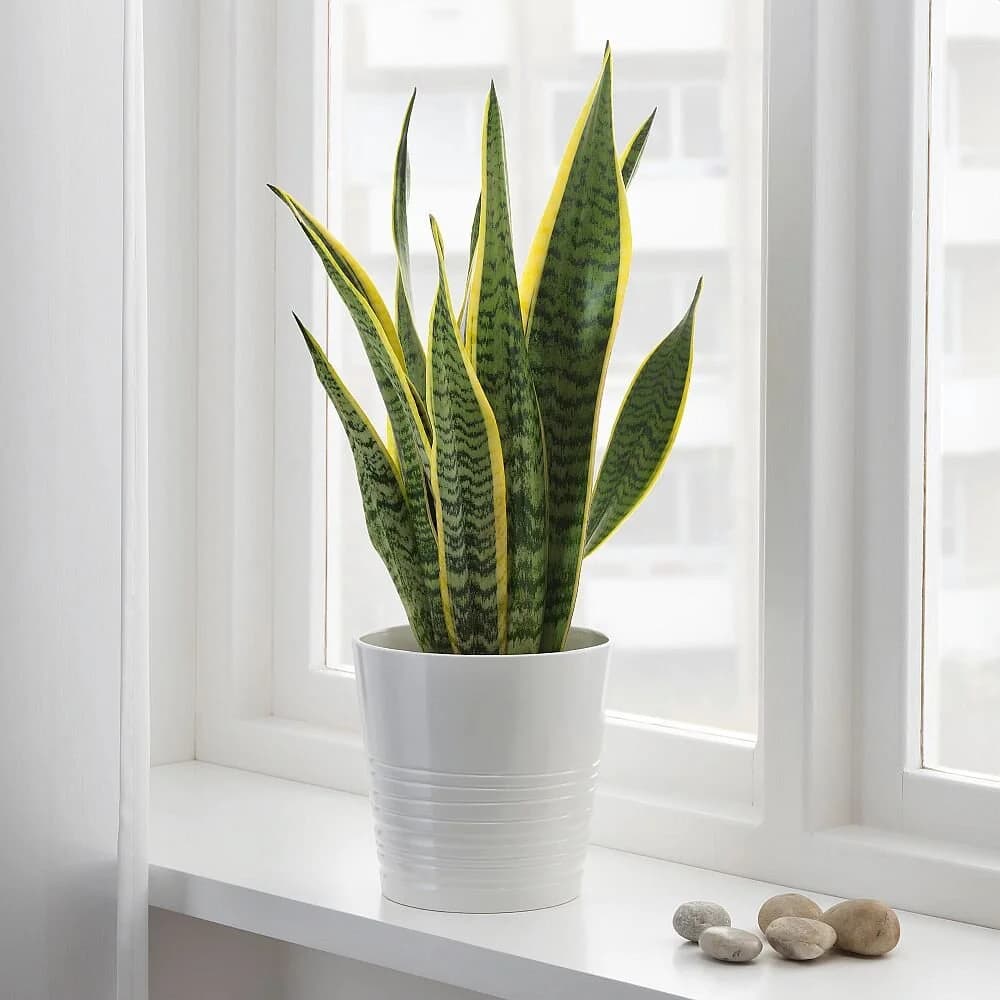
01Snake Plant
Dracaena trifasciata
The Snake Plant is the default indoor plant in Nepal offices and flats, and it earned that place. Upright leaves take almost no floor space, low light does not bother it, and it keeps its shape when watering slips. It releases a little oxygen at night — a real trait, and still too small for one pot to freshen a shut bedroom.
- Low light
- Missed waterings
- Bedroom shape
- Light
- Low to bright indirect light; direct afternoon sun can scorch the leaves
- Water
- Let the soil dry through before watering; less in winter
- Best for
- Bedrooms, offices, hallways, and compact apartments
Styling tip: Stand a tall one in a narrow corner beside the bed. Use a heavy pot so it does not tip when the leaves get long.
 02
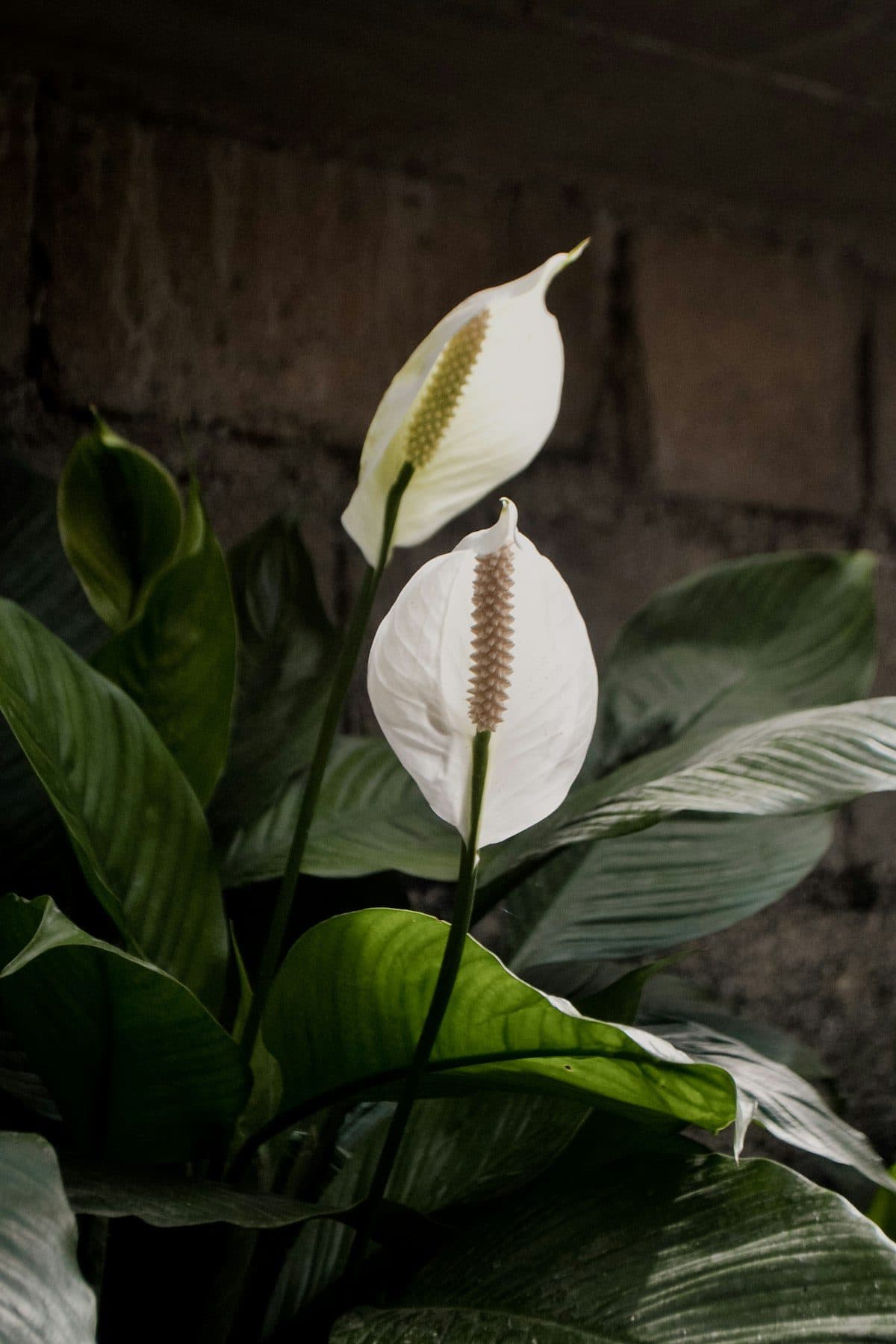
02Peace Lily
Spathiphyllum wallisii
Peace Lily is the flowering one on this list. Glossy leaves and a white spathe make it a common gift across the valley. It tells you when it is thirsty by drooping, then stands back up after a drink. NASA’s chamber tests included it for several household chemicals. In a real flat it is simply a plant that likes even moisture and medium light.
- White flowers
- Clear thirst signal
- Gift plant
- Light
- Medium indirect light; a north or east window in Kathmandu is enough
- Water
- Keep the mix lightly moist; empty the saucer so the roots do not sit wet
- Best for
- Living rooms, shaded offices, and gift orders
Styling tip: Skip a sunny west sill in late spring. The leaves bleach, and the flowers stop. Keep it away from cats and dogs — the sap irritates.
 03
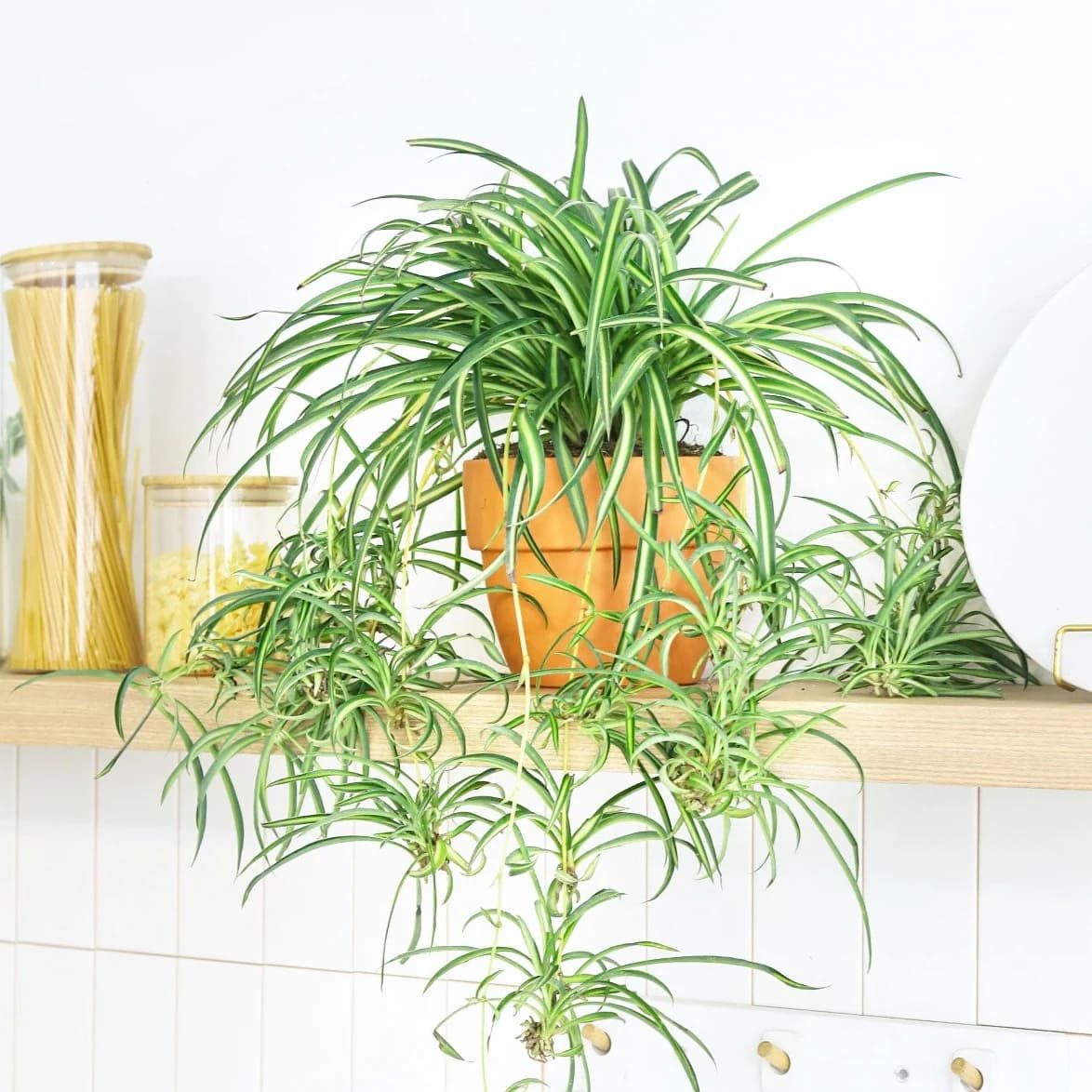
03Spider Plant
Chlorophytum comosum
Spider Plant is the hanging plant most Kathmandu kitchens can keep. Arching striped leaves throw out baby plantlets you can pot up and pass to a neighbor. It was part of the same NASA chamber work, and unlike several plants on this list it is generally treated as safe if a pet nibbles a leaf.
- Hanging habit
- Easy plantlets
- Kinder around pets
- Light
- Bright indirect or moderate light; thin, pale leaves usually mean it is too dark
- Water
- Water when the top of the soil starts to dry; brown tips often trace to salts in tap water
- Best for
- Kitchen shelves, hanging baskets, and bedrooms
Styling tip: Rainwater, or tap water left in an open jug overnight, keeps the leaf tips cleaner than a fresh pour from the tap.
Areca Palm is the living-room plant. Feathery fronds soften a hard corner and, because the leaf area is large, it gives off more moisture than a desk plant. That matters in December and January, when valley rooms dry out. It also sits on the safer side for pets. It is not a low-light plant, and a dark lobby will thin it out.
- Humidity
- Softens a room
- Generally pet-safer
- Light
- Bright indirect light; a few hours near an east window suits most valley flats
- Water
- Water when the top few centimeters dry; never leave it standing in a saucer through monsoon
- Best for
- Living rooms, reception corners, and bright halls
Styling tip: Turn the pot a quarter turn each time you water so the fronds do not lean toward the window.
 05
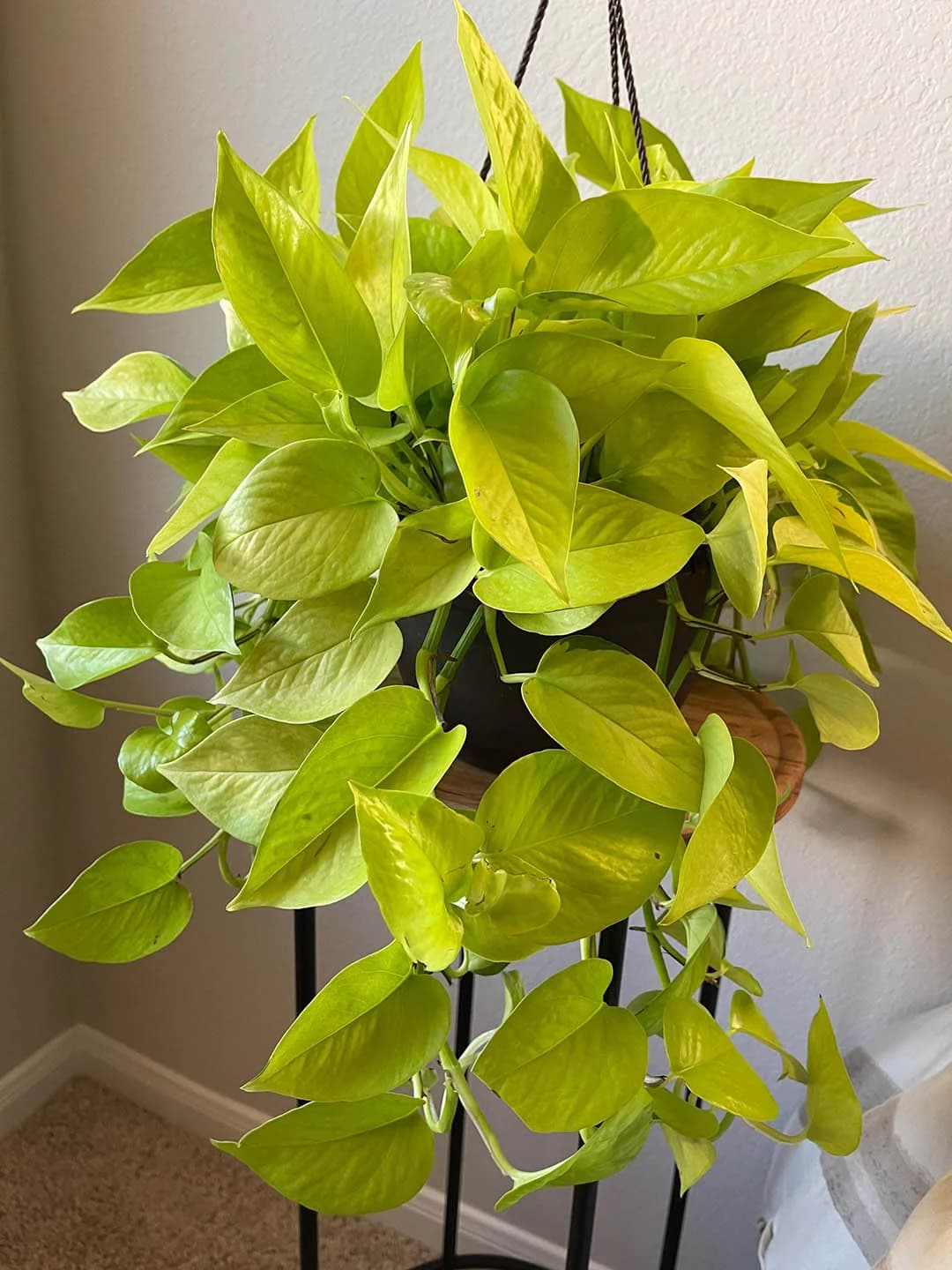
05Money Plant
Epipremnum aureum
Money Plant — pothos — is the everyday vine in Nepal. Golden and neon forms are the same species. A cutting roots in a glass of water, then grows along a shelf or down a balcony rail indoors. It tolerates the soft light of an interior room better than a palm does. The leaves are toxic if chewed, so hang it if you have pets.
- Cuttings
- Shelves and hangers
- Soft light
- Light
- Low to bright indirect light; neon color fades if the room is dim
- Water
- Let the soil dry partway; yellow leaves usually mean the pot stayed wet
- Best for
- Shelves, desks, hanging planters, and office partitions
Styling tip: A plain white or clay pot makes a neon plant the bright thing in the room. Wipe the leaves when valley dust dulls them.
 06
06Rubber Plant
Ficus elastica
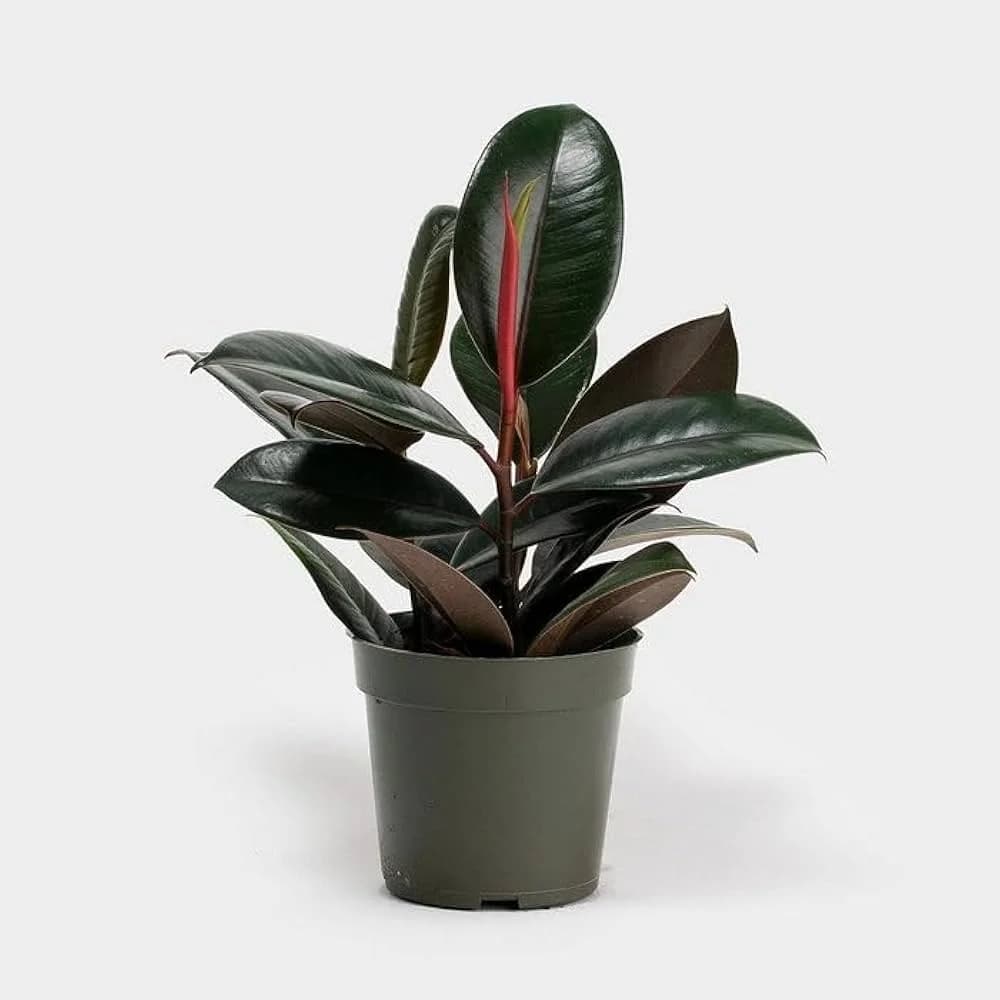
Rubber Plant earns its place on air lists because of those big glossy leaves, and it earns its place in a Kathmandu home because the leaves show dust immediately. Wiping them is the closest thing this guide has to an air-care chore that you can see. The plant itself is steady in medium light and looks finished in an office without flowers or clutter.
- Broad leaves
- Steady indoors
- Office form
- Light
- Medium to bright indirect light
- Water
- Let the top of the soil dry; cut back sharply in winter
- Best for
- Living rooms, offices, and entrance corners
Styling tip: A damp cloth once a month does more for this plant in the valley than any spray. Support the leaf from underneath so you do not crack it.
 07
07Aloe Vera
Aloe vera
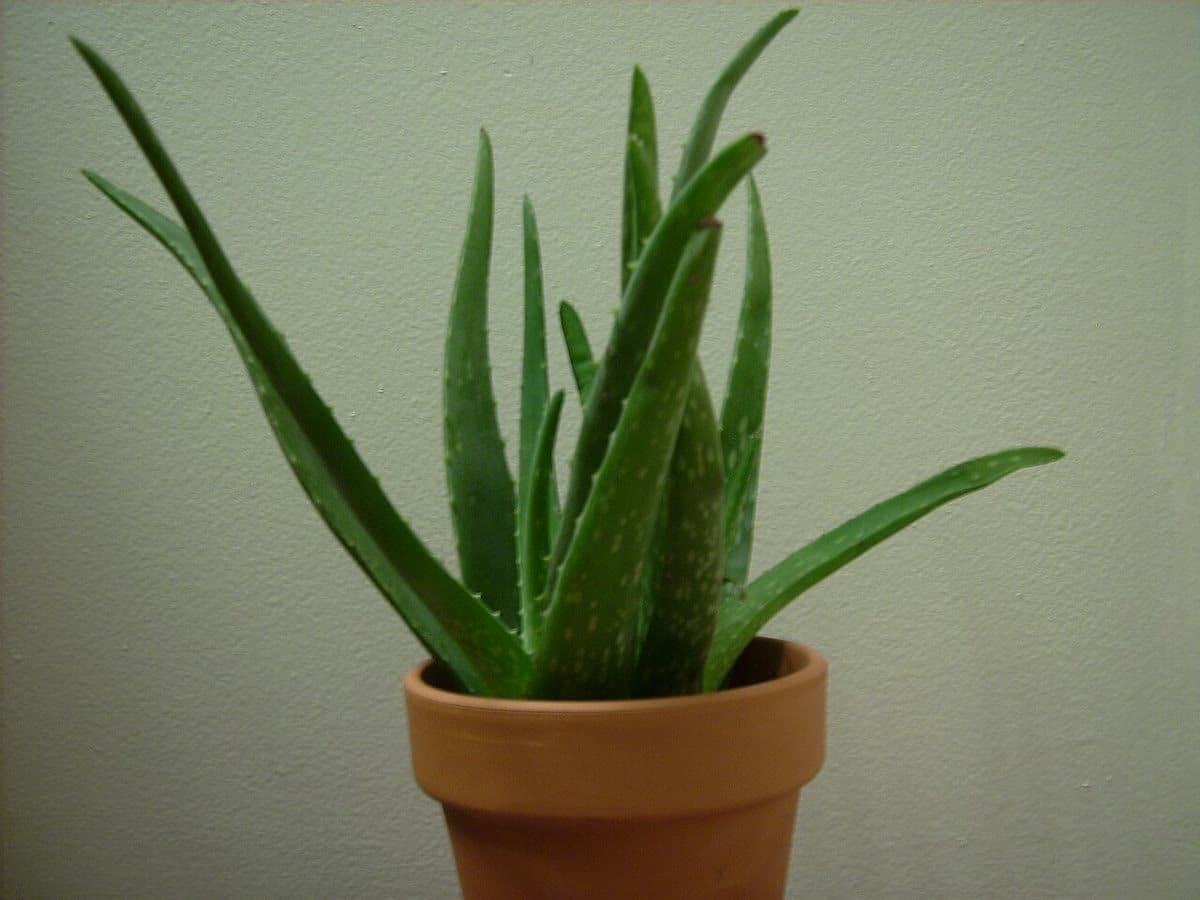
Aloe wants sun, which makes it the kitchen-window plant rather than the hallway plant. A bright sill in Kathmandu works; a Terai window that gets harder sun works even better. The gel inside a leaf is a household habit for minor skin comfort — that is home use, not a treatment. Water it like a succulent or the roots rot.
- Sunny sills
- Succulent
- Compact
- Light
- Bright light, including some direct morning sun
- Water
- Let the soil dry fully; in winter, many plants need water only every few weeks
- Best for
- Kitchen windows, sunny desks, and warm rooms
Styling tip: A clay pot dries faster than plastic and suits aloe in humid monsoon weeks as well as dry winter ones.
Boston Fern is the humidity plant. In monsoon it is almost effortless on a shaded balcony or in a bright bathroom. In December and January, when indoor air in Kathmandu is dry, the fronds crisp unless you mist it or group it with other pots. Later air-plant lists added it for that leaf area, and it is generally listed as safe around pets. It is the wrong first plant if you travel a lot.
- Humidity
- Hanging shape
- Fussy in dry winter
- Light
- Indirect light; harsh sun burns the fronds
- Water
- Keep the mix evenly moist, not soggy; do not let it dry to dust
- Best for
- Bright bathrooms, shaded balconies, and hanging baskets
Styling tip: Set the pot on pebbles over a tray of water, with the base above the water line, when winter humidity drops.
 09
09Dracaena
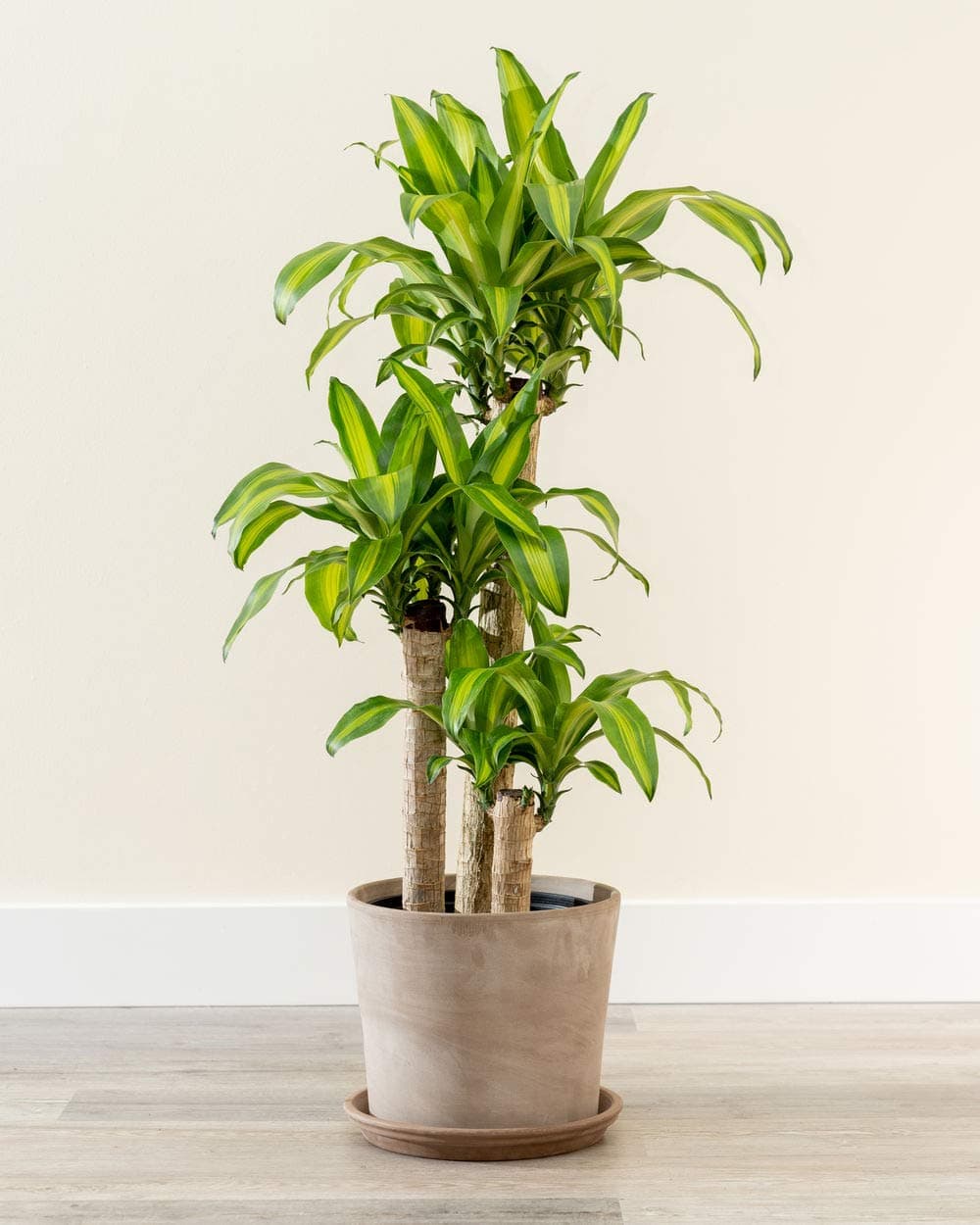
Dracaena spp.
Dracaena is the slim office tree. Marginata stays narrow enough for a desk or a tight corner; cane forms give you more leaf without a wide footprint. Both show up in indoor air studies and both dislike fluoride-heavy water, which shows up as brown tips. They are slow, which is what you want in a room you are not constantly rearranging.
- Narrow footprint
- Office height
- Slow growth
- Light
- Medium to bright indirect light
- Water
- Let the soil dry slightly; brown tips often improve if you switch to rainwater
- Best for
- Offices, living-room corners, and entrance spots
Styling tip: Keep it off the floor in a pet house. Dracaena is toxic if chewed.
 10
10Aglaonema
Aglaonema commutatum
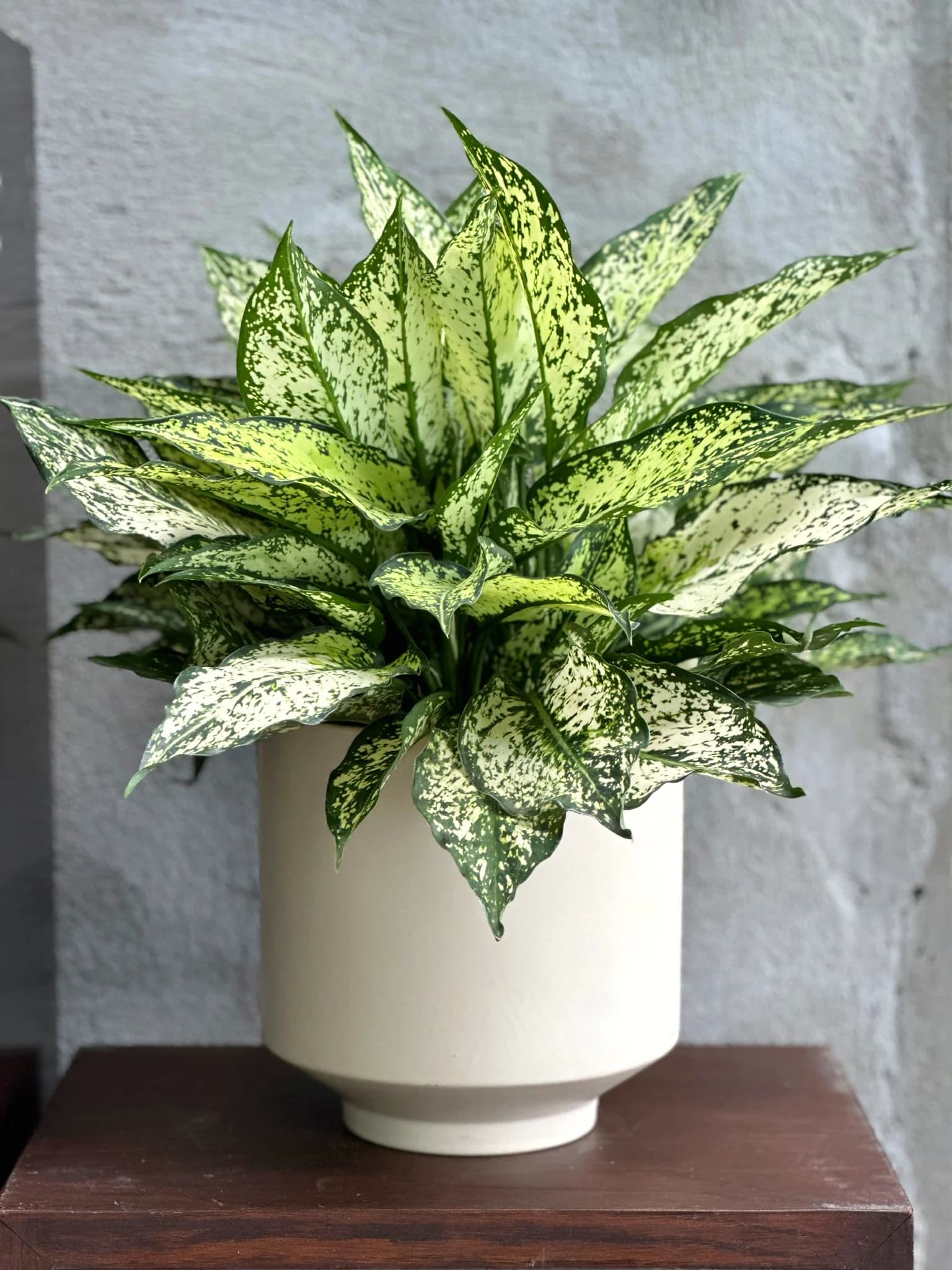
Aglaonema, or Chinese Evergreen, is the patterned plant for rooms that never get a proper window. Silver and green leaves hold their color in the soft light of many Kathmandu apartments and interior offices. It was included in NASA’s chamber list and it asks for less water than a peace lily. Cold night drafts in winter are what usually mark the leaves.
- Low light
- Patterned leaves
- Compact
- Light
- Low to medium indirect light; keep it out of hard sun
- Water
- Let the upper soil dry slightly before watering
- Best for
- Bedrooms, offices, and interior corners
Styling tip: Pull it a step back from a window you open at night in winter. A cold blast marks the foliage faster than low light does.
What “air-purifying” means in a real room
In 1989, NASA tested houseplants in sealed chambers and recorded drops in a few volatile compounds, including formaldehyde, benzene, and trichloroethylene. Snake plant, peace lily, spider plant, money plant, dracaena, and Chinese evergreen were in that work. Areca palm, rubber plant, and Boston fern ranked highly in the houseplant lists Wolverton published later, largely for leaf area and the moisture they release. Aloe is the sunny-sill plant from that same tradition of indoor air guides.
A 2019 review by Cummings and Waring looked at those removal rates and compared them with ordinary room ventilation. Their conclusion is the one to shop with: you would need an impractical number of plants to match what air exchange already does. A few pots in a Lalitpur flat will not scrub traffic fumes or a fresh coat of paint.
Buy these plants because they fit the room and because a cared-for plant makes dry winter air feel less harsh. Open a window when the valley air is decent. Wipe leaves. That combination does more than the word “purifying” on a label.
Where to put them
- Bedroom: Snake Plant, kept up if pets sleep in the room
- Living room: Areca Palm or Rubber Plant
- Office desk: Aglaonema or a small Dracaena
- Bright kitchen sill: Aloe Vera, or Money Plant if the light is softer
- Hanging: Spider Plant or Boston Fern
- Homes with pets: spider plant, areca palm, and Boston fern are the safer three on this list
Browse indoor plants if you want sizes beyond the ones named here.
Care through a Kathmandu year
Dry winter
From roughly mid-November to mid-March, indoor air is cool and dry and growth slows. Water snake plant, rubber plant, and aloe only after the soil has dried. Group the areca and the fern with other pots, and mist the fern if the fronds crisp. A tray of pebbles and water under the pot — not touching the drainage hole — raises humidity without rotting the roots.
Monsoon
From mid-June through September, the risk flips. Mix stays wet, saucers fill, and roots fail. Check with a finger before you water. If the top is damp, wait. Peace lily, areca, and fern rot fastest in a pot with no hole. See how often to water indoor plants in Kathmandu for a simple rhythm that works across the year.
Pets and children
Spider plant, areca palm, and Boston fern are generally listed as non-toxic to cats and dogs. Snake plant, peace lily, money plant, rubber plant, aloe, dracaena, and aglaonema can irritate or poison an animal that chews them. Hang the vines, or choose the safer three, if a pet has the run of the floor. The same sap that bothers a dog can bother a child who bites a leaf.
Frequently asked questions
What are the best air-purifying plants in Nepal?
Snake Plant, Peace Lily, Spider Plant, Areca Palm, and Money Plant are the five to start with. They are widely grown in Kathmandu homes and handle typical valley light. Snake plant, peace lily, spider plant, and money plant were in NASA’s sealed-chamber tests; areca palm leads later houseplant rankings for the moisture it gives off. Match the plant to the room before you buy — a fern in a dark, dry corner will struggle even if the label says air-purifying.
Which air-purifying plant is best for a bedroom?
A Snake Plant is the most practical bedroom choice in Nepal. It stays upright, tolerates low light, and copes with missed waterings. People also like it because it releases a little oxygen at night, though one pot will not change the air in a closed room. Keep it off the floor if a cat or dog chews plants.
Do houseplants really clean indoor air?
In sealed lab chambers, several of these plants reduced small amounts of formaldehyde, benzene, and similar compounds. In a normal room, a handful of pots does not replace an open window. Use them for comfort — a bit of humidity in dry winter, leaves you can wipe free of dust — and keep ventilating.
Which air-purifying plants are easiest for beginners?
Snake Plant, Money Plant, and Spider Plant forgive irregular watering and ordinary apartment light. Areca Palm and Boston Fern need more consistent moisture, especially in Kathmandu’s dry winter. Start with the easy three if you are new to plants.
How often should I water air-purifying plants in Kathmandu?
Check the soil instead of the calendar. Most of these plants want water when the top few centimeters feel dry — often every 7–14 days indoors, less in winter, and less again in the monsoon if the room stays humid. Peace Lily and Boston Fern prefer to stay slightly moist. Snake Plant, Rubber Plant, and Aloe Vera prefer to dry out.
Bring one home
These ten are in regular nursery stock in Nepal, and they are the ones that match how valley homes actually get light. Start with a snake plant if the room is dim, a spider plant if you want something you can hang, or an areca palm if the living room is bright.
Explore indoor plants, or tell us about the room if you want a hand matching a plant to the light you have.